2026级新生入学常见问题
信息来源:巩颛硕学姐、《新疆师范大学2026级新生入学指南》 ❤️👍🌸
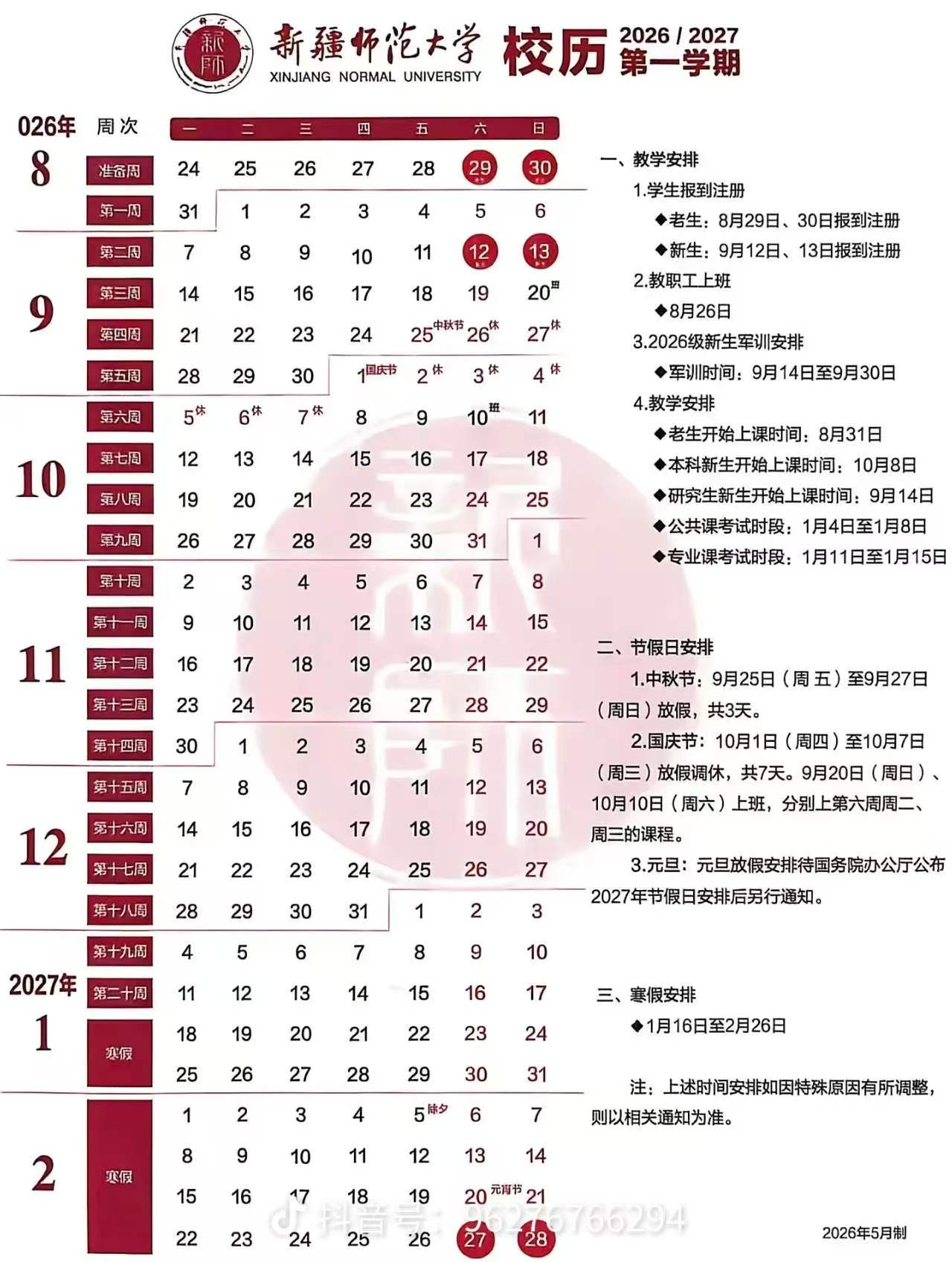
2026级本科新生报到时间为9月12日—13日。
因故不能按期入学者,应提前向报到学院请假,请假时长一般不超过两周。未请假或请假逾期(不可抗力等正当事由除外)视为放弃入学资格。
各学院分别设置专属新生接待服务台,迎新志愿者全程在校内引导新生及家长办理各项报到手续。
- 身份核验:携带录取通知书、本人身份证原件等有效证件,到所属学院接待点核对入学身份与资格。
- 材料递交:提交个人纸质档案、党团组织关系材料、户口迁移材料(自愿办理)及其他备案资料,由工作人员统一审核登记。
- 物资领取:核验无误后统一领取校园一卡通。
- 宿舍入住:凭宿舍分配凭证前往对应公寓楼,在宿管老师处办理入住登记、领取宿舍钥匙,熟悉宿舍内务及公寓安全管理要求。
- 录取通知书(原件)、准考证(原件)、身份证及复印件、一寸照片若干。
- 高中学籍档案(自带交至学校,也可由生源高中统一邮寄)。
- 及时关注学校及所属学院官方发布的各类新生通知。
- 主动扫描官方二维码,加入院系新生总群及班级新生微信群、QQ群、钉钉群。
- 关注群内发布的军训安排、班会通知、材料补交、入校须知等重要工作信息。
- 不随意加入非官方陌生社群,谨防诈骗信息。
分班结果:目前已公布,可登录新疆师范大学学费缴纳页面查询:浏览器输入 finpt.xjcz.gov.cn/edu-app/,进入"学生缴费查询",输入身份证号、选择班级,即可看到分班信息。
宿舍寝室:信息需要等到报到当天现场才可以知晓。
宿舍安排:计科院新生均在昆仑校区:男生住8号楼,女生住7号楼,均为8人间。宿舍为学校统一分配,无法自行挑选。新生宿舍(8号楼)已经完成翻新整改。
报到流程:报到当天,携带相关证件去宿管值班室登记信息、领取钥匙即可看到对应的床位。
床铺为标准单人床,尺寸为 0.9米 × 2米。宿舍允许挂床帘。
每个床头都配有插座(一个两孔 + 一个三孔),如果电子设备较多,建议自备一个插排。
宿舍不统一配备床单、被罩、被褥、枕芯、棕垫,可以自带,也可以入校后在宿舍楼管处购置。
档案必须保持密封完好,严禁个人私自拆封、涂改、拆装。
- 生源省份允许自带档案:妥善保管密封状态,报到时上交学院归档。
- 统一邮寄档案:邮寄至新疆师范大学你的报到学院。
线上转接:在"智慧团建"系统中将团关系转入,全称为:新疆师范大学计算机科学技术学院团委。转接时间灵活,现在或开学后转均可。
报到携带:团员组织关系介绍信、团员档案。
入团档案要求:
- 2018-01-01 前入团:档案至少含团员证、团员基本信息登记表。
- 2018-01-01 之后入团:档案含入团申请书、入团积极分子培养考察表、入团志愿书、团员证、团员基本信息登记表。
团员证盖章:"组织关系转接"栏由高中/专科院校团委填写转出时间、团费收缴情况,并加盖团委公章。
入校后:本人登录智慧团建系统,申请转入所在班级团支部,由班级团支部统一处理。材料缺一不可,请务必妥善保管。
- 全疆及外省新生,在智慧党建工作一体化平台转接,现所在党组织转往:"新疆师范大学XX学院党委"。
- 特殊情况无法线上办理:持原党组织开具的纸质组织关系介绍信,抬头"新疆师范大学XX学院党委",报到后交给学院组织员。
- 入党申请人、积极分子、发展对象,请把入党过程性材料交给学院组织员接续培养。
- 自愿迁移:可迁入学校集体户;乌鲁木齐市户籍不迁。
- 疆外、疆内兵团学生:需派出所盖章的《户口迁移证》;疆内其余地区学生按当地公安政策办理。
- 落户递交录取通知书原件、身份证复印件;所有证件姓名、出生日期必须完全一致。
- 落户期限:开学三个月后不再接收落户材料。
- 迁移地址:昆仑校区—沙依巴克区新医路102号友好北路派出所。
属地参保原则,自愿选择在学校所在地或户籍所在地参加城乡居民医保。按医保通知完成信息登记、缴费,激活电子医保凭证。
学校统一组织校园补充医疗保险(学平险),覆盖门诊、住院、意外伤害。
建议:最省事的做法是开学到校后统一办理。
原因:学校统一办理的是"交通银行卡 + 乌鲁木齐社保卡"二合一的一类卡。如果提前在老家办了交行卡,虽然可以带到学校用,但后续学校发放补助、医保报销等都需要乌鲁木齐属地社保卡,还得再单独办,比较麻烦。
便利:每届新生开学报到期间,交通银行工作人员会进驻校园,在校内搭建临时办事帐篷设立专属办理点。新生携带本人身份证,前往现场即可办理。
学费(按新疆维吾尔自治区现行规定):
| 专业类别 | 收费标准 |
|---|---|
| 理工类 | 4500 元 / 生·年 |
住宿费:8人间 600 元/年。
学费和住宿费为统一缴纳,教材费另行收取,伙食费实行自理(充值校园卡就餐)。缴费方式(新疆教育收费系统):
- 浏览器输入:finpt.xjcz.gov.cn/edu-app/
- 微信公众号"新疆师范大学" → 新师服务 → 学费缴纳
- 微信扫描缴费二维码登录
操作步骤:进入"学生缴费查询"→ 填身份证号、选择班级、输入验证码查询订单 → 核对姓名后点击缴费 → 跳转财政厅非税网银页面,支付银行勾选"招商银行"(支付不限银行卡)→ 确认后完成微信支付 → 在缴费记录中点击订单号查验、预览下载票据。
注意事项:缴费务必核对身份证号(他人代缴输入学生本人身份证号即可);票据下载至少缴费完成15分钟以后;系统维护时间每日 23:55–次日00:05,建议 10:00–19:00 缴费。
作为新生,请按以下流程操作,不需要硬卡在线上资质核验环节:
- 购票方式:在铁路12306 APP上,根据购票提示正确填写"新生"身份进行购票。
- 关于核验:目前因为学信网的大学学籍尚未录入,线上资质核验无法通过是正常现象,无需焦虑。
- 进站乘车(重点):携带身份证和录取通知书,直接走车站的人工通道(人工检票口)。工作人员查验录取通知书后会予以放行。
- 后续补录:等到学校正式下发学生证(或学信网学籍已正式录入)后,再拿着学生证去火车站或12306完成"学生资质核验"绑定即可,以后买票就正常了。
报到期间学校在乌鲁木齐天山国际机场、乌鲁木齐站设置接站,寻找带有"新疆师范大学"标识的横幅、接站牌即可。详细咨询学院新生群。
昆仑校区(沙依巴克区新医路102号):
- 乌鲁木齐站:BRT1号线至八楼站换乘BRT2号线到师大站,或906路到师大附中站(40–50分钟);网约车/出租车约8公里、25分钟。
- 火车南站:BRT1转BRT2或906路(约50分钟);网约车/出租车约10公里、25–30分钟。
- 天山国际机场:535路直达师大站点,或地铁1号线换乘BRT2(约70分钟);网约车/出租车约21公里、30分钟。
按要求规范填写《家庭经济困难学生认定申请表》(封底扫码获取电子版,或入校后在辅导员处领取),报到时上交学院审核认定,纳入学校重点资助范围。
- 建档立卡、低保、残疾学生携带对应证件复印件。
- 办理生源地贷款的新生:报到时上交借款合同复印件、贷款受理证明给辅导员。
- 认定表不需要盖章,本人签字承诺如实填写即可;也可在全国学生资助管理中心网站下载。
新生可在户籍所在地教育局学生资助管理中心申请办理助学贷款。在校就读期间贷款利息由国家财政全额补贴,毕业之后按规定分期偿还本金及利息。
报到时需上交借款合同复印件、贷款受理证明给辅导员。
- 国家奖学金:奖励特别优秀全日制本专科在校生,每生每年 10000 元。
- 国家励志奖学金:品学兼优家庭经济困难学生,每生每年 6000 元。
- 国家助学金:平均每生每年 3700 元(区间 2500–5000 元,分 2–3 档);退役士兵本专科生全部享受 3700 元/年。
- 国家助学贷款:信用贷款,优先交学费住宿费,每年最高 20000 元;在校期间国家承担利息,学制+15年、最长22年;分生源地、校园地助学贷款,同一学年不可同时办理。
- 服兵役资助:入伍学费补偿/贷款代偿、退役复学/新生入学学费减免,每年最高 20000 元。
- 基层就业补偿代偿:到中西部艰苦边远县以下基层服务满3年及以上,每年最高 20000 元。
- 师范生公费教育、优师计划:免学费住宿费,发放生活补助。
- 滋蕙计划(新生入学资助):中西部生源家庭经济特别困难新生,补助交通费、短期生活费,向县级教育部门申请。
- 勤工助学、绿色通道:课余劳动取酬;暂时无法缴齐学费住宿费的困难新生可先办入学手续,入学后再认定资助。
- 自治区励志奖学金:品学兼优困难学生,6000 元/生·年。
- 自治区助学金:平均 2000 元/生·年;一等 3000、二等 2000、三等 1000。
- 自治区高校伙食补助:财政每生每月 20 元,每年发放 10 个月,学校配套同标准。
- 基层就业学费补偿、国家助学贷款代偿:到自治区艰苦边远基层服务满 3 年及以上,本专科每年最高 20000 元。
学校资助:临时困难补助、勤工助学、校级奖学金。
社会资助:新长城自强助学金 2500 元/年;筑梦奖学金 4000 元/年;聿晏专项奖学金(校友捐赠)3880 元/年。
如遇突发变故,可申请学校临时困难补助。可关注公众号"中国学生资助"。开学谨防冒充老师、资助机构的电信诈骗,拒绝非法网贷。
教学楼、图书馆公共区域:免费。使用校园网WiFi,直接用学号登录即可,不需要办理电话卡。
宿舍内上网:宿舍内无学校免费WiFi。寝室上网由三大运营商提供,需要办理对应运营商的电话卡才可以开通宿舍网络。办卡属于自愿行为,大家根据自身需求选择即可。
非上课时间原则上可以正常进出校园。但宿舍楼有晚上 12点宵禁,请务必按时归寝。
人身安全:不轻信校外推销、校园贷、刷单兼职、高薪招工;不跟陌生人去偏僻地点;外出告知室友/辅导员去向,不深夜独自外出。
财产安全:身份证、银行卡、校园卡、账号分开保管;密码独立设置,绝不泄露验证码;宿舍不存放大量现金,贵重物品收纳,离宿锁门。
宿舍安全:严禁电热水壶、电热毯、电磁炉等大功率违规电器;禁止私拉电线;不存放易燃易爆品;宿舍禁止吸烟明火;做到人走断电锁门。
网络安全:不点陌生链接,不装不明来源APP,不给陌生账号转账;遇诈骗第一时间联系辅导员或保卫处。
大一有晚自习,晚上 9:40 放学。
英语四级考试需要等到大一下学期才可以报名参加。
官方立场:学校不强制要求新生购买电脑。开学初期以报到注册和军训为主,对电脑没有硬性需求。大家可以根据自己家庭情况和专业需求,后续再决定是否购置。
学长/学姐参考建议:如果你打算购买电脑(尤其是计科院同学,后续编程等学习会用上),主流配置建议为:内存 16GB 或 32GB;硬盘 512GB 或 1TB 固态硬盘(SSD)。仅供参考,具体看个人预算和专业软件需求。
邮寄地址:新疆维吾尔自治区乌鲁木齐市沙依巴克区友好北路街道新医路102号 新疆师范大学昆仑校区。
校园地图:可扫码查看校园云导览(《新生入学指南》手册内的小程序二维码),查看昆仑校区楼宇、道路、景观。
学校附近有一所新疆医科大学第一附属医院,距离学校约 1.5 公里左右,看病就医比较方便。
应征地:高校新生在入学前户籍所在地应征;在校生、毕业生可学校所在地或户籍地应征。
保留入学资格:新生入伍学校保留入学资格,退伍后 2 年内可入学。流程:全国征兵网填写打印申请表 → 县级征兵办盖章提交学校 → 退伍2年内凭通知书和保留入学资格通知书返校入学。
学费国家资助:本专科每年最高 20000 元。
升学优惠:服役获三等功、二等功、二级以上表彰可申请硕士免初试;退役大学生士兵考研初试总分+10分、同等条件优先录取;国家退役大学生士兵专项硕士招生计划;高职专科退役完成学业可免文化课专升本;复学经学校同意可转专业。
基本条件(简要):男性身高≥160cm,女性≥158cm,年龄18–22周岁;BMI、视力等以全国征兵网最新为准。
报名:全国征兵网 www.gfbzb.gov.cn。流程:网上报名 → 初检 → 体格检查 → 政治考核 → 役前教育 → 审定新兵 → 交接运输。
| 学院 | 群类型 | 群号 |
|---|---|---|
| 计算机科学技术学院 | QQ群 | 1041368761 |
| 学院 | 咨询电话 |
|---|---|
| 计算机科学技术学院 | 0991-4333159 |
学校官网:www.xjnu.edu.cn · 本科招生网:zhaosheng.xjnu.edu.cn